
Cauldon Place Works
Early drabware
Job Ridgway states in his 'Memoir' (G. A. Godden, Ridgway Porcelains (Woodbridge, 1985), pp. 200-3.) 'I ... erected a manufactory by the Cauldon Canal, and commenced working it in the year 1802.' He also states 'My eldest son being now near twenty-three tears of age, and my other son more than twenty-one, ... I gave them, in 1808, an equal share in my business: in this year also we began to make China, which increased our labour and cares; nevertheless, we passed the year in comfort.'
It should be noted that Ridgway bone china wares appear to commence around pattern 300, so it is probably safe to assume that patterns c.300-c.500 began to be manufactured between 1808 and c.1810, the latter date being supplied by Dr. Godden for the introduction of the 2/ series.
It therefore also follows that pattern numbers below c.300 must have originated between 1802 and 1808. John Harbold has published work on drabwares originating from the factory in this period, and has kindly allowed me to use photographs of pieces from his collection. Janis Rodwell has kindly done the same for her bough pot. See J. Harbold, 'Discoveries in Early Ridgway Drabware', NCS Newsletter 184 (December 2016), pp. 41-44.
Job Ridgway
Drabware Snake Jugs
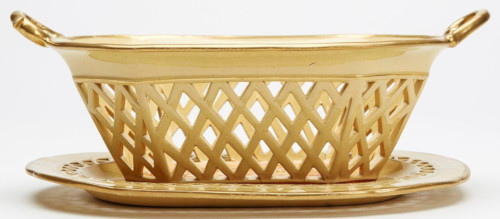
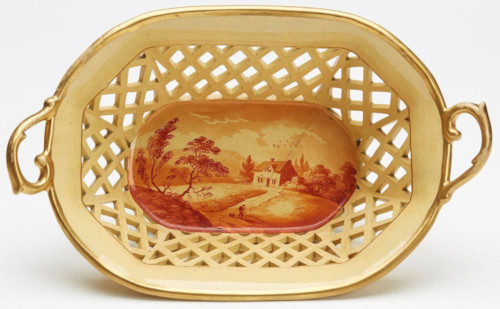
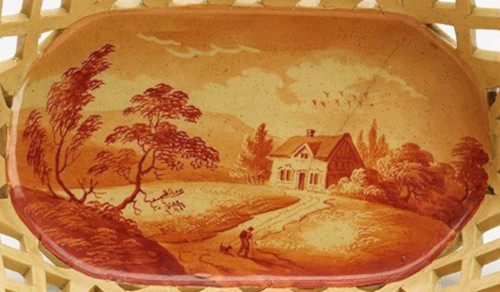
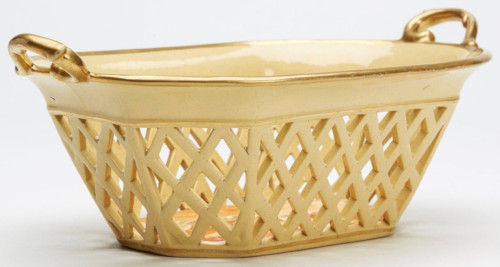
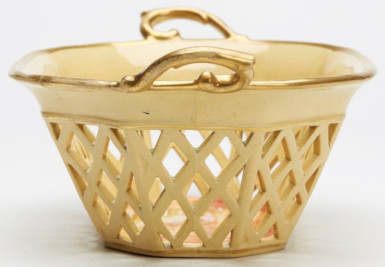
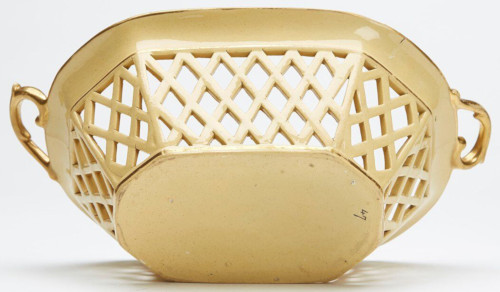
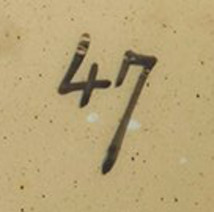
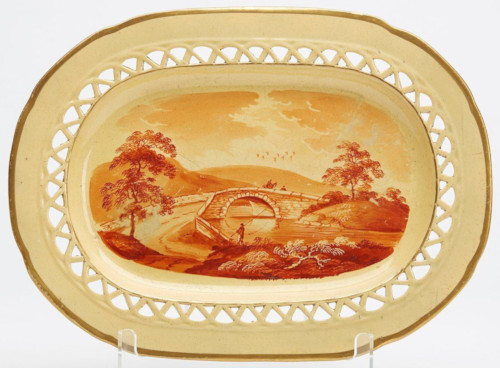
Pattern 47
The fruit basket and stand is 268mm long, 183mm wide, and 100mm tall overall. Drabware.
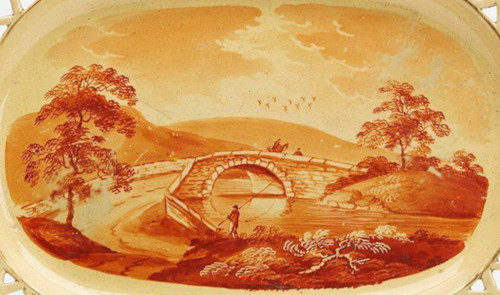

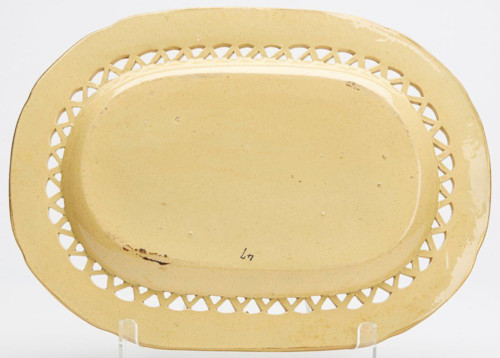
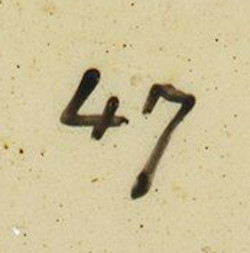
Photos © mckenzieartanddesign (eBay) 2023
The dessert plate is 190mm in diameter. Drabware.


Photos © John Harbold 2017-18
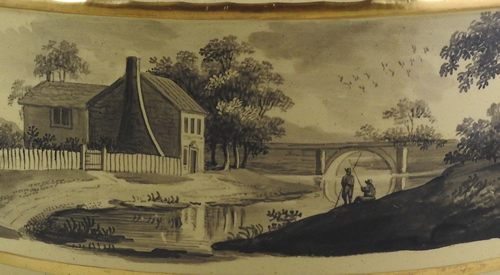
The bough pot 152mm long, 114mm tall, and 89mm deep. Drabware.
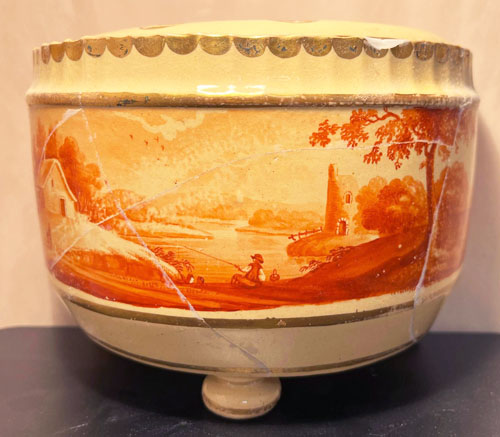
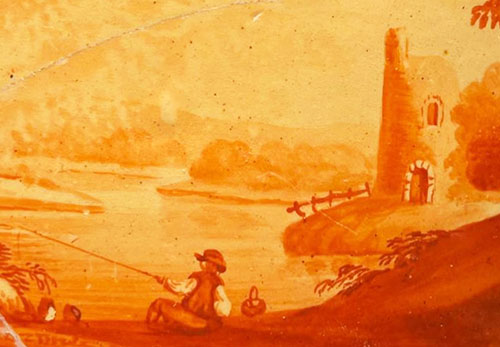
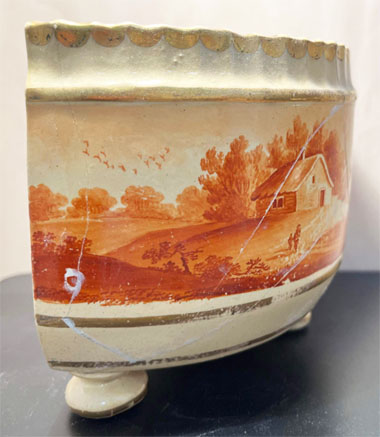
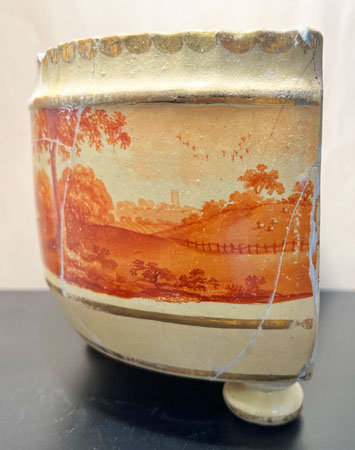
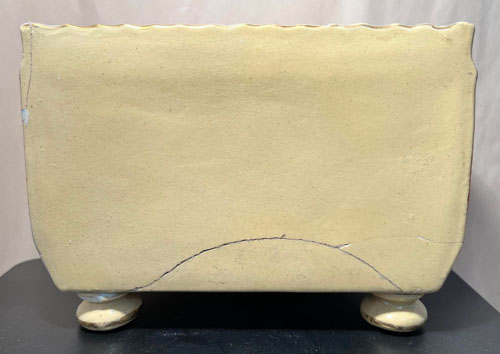
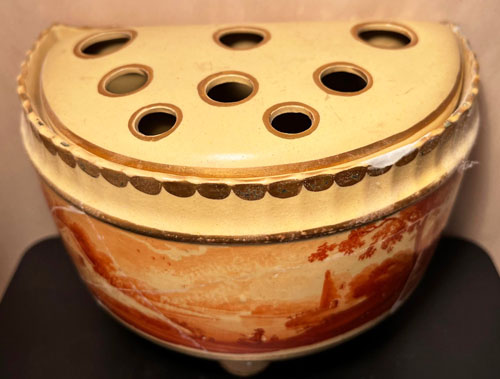
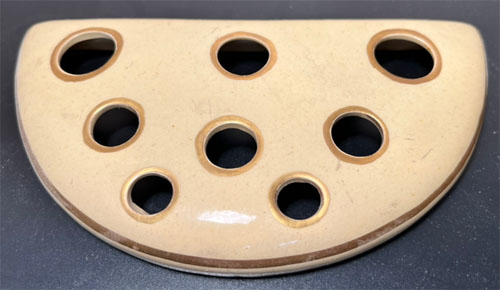
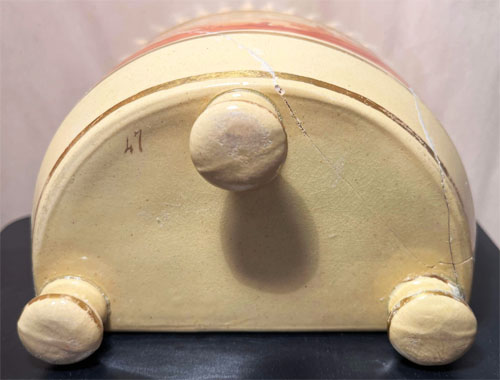
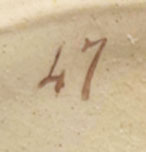
Photos © Paul S Fawcett 2022
Return to Cauldon Place patterns
Pattern 108
The fruit basket stand is 245mm long. Drabware.


Photos © John Harbold 2017-18
A second fruit basket stand. Drabware.


The white patches appear to be flaws, possibly blow outs, in the glaze. Curiously the large one on the front appears to have been painted round.
Photos © Robert Hawker 2020
The bough pot. Drabware.



Photos © Janis Rodwell 2018
Return to Cauldon Place patterns
Pattern 235
Birds from Bewick.
This black & iron-red decoration is the same as that on Ridgway bone china Patterns 317 and 500.
The oval dessert dish is 273mm long, 178mm wide, and 45mm tall. Drabware.
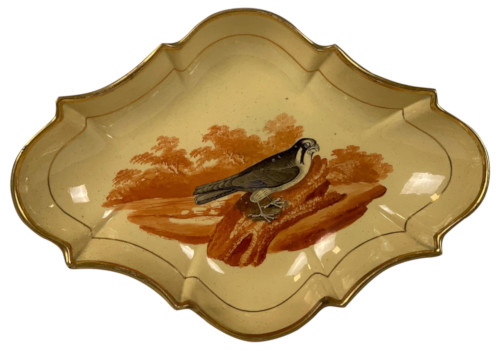
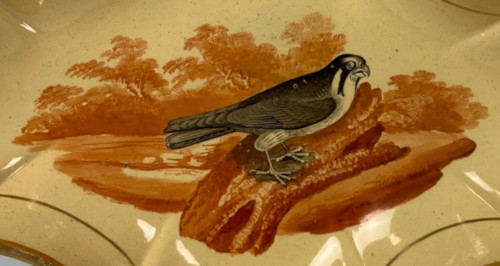
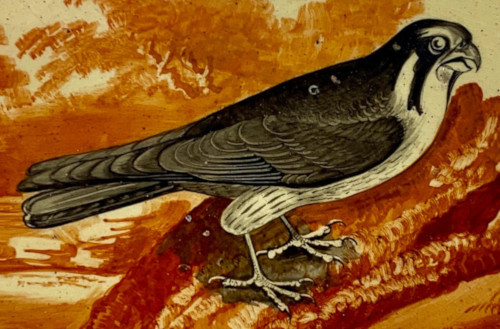
This is taken from Bewick's illustration of 'The Hobby'.
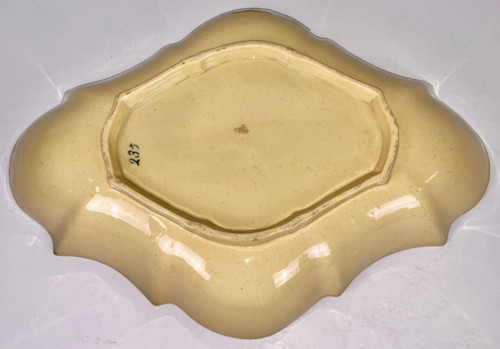
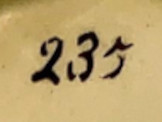
Photos © Bardith New York 2023
The leaf dessert dish is 205mm by 200mm. Drabware.
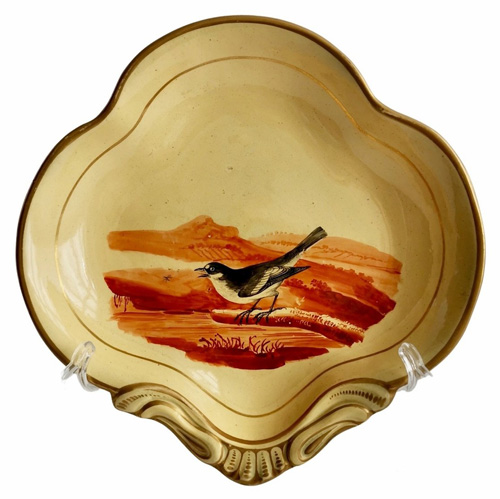
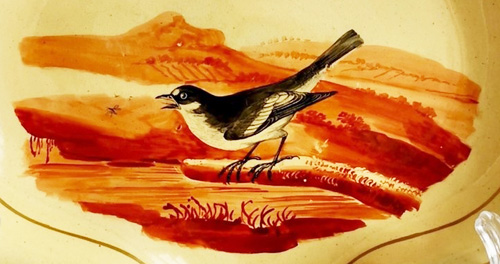
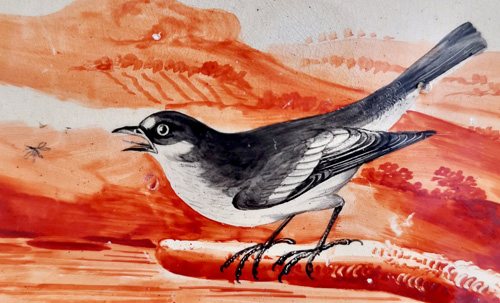
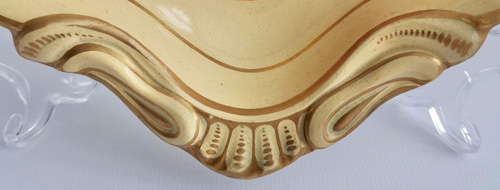
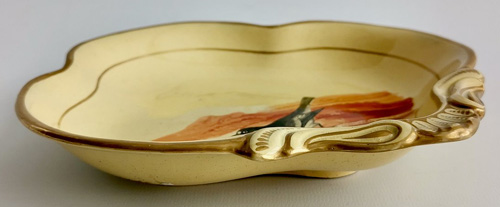
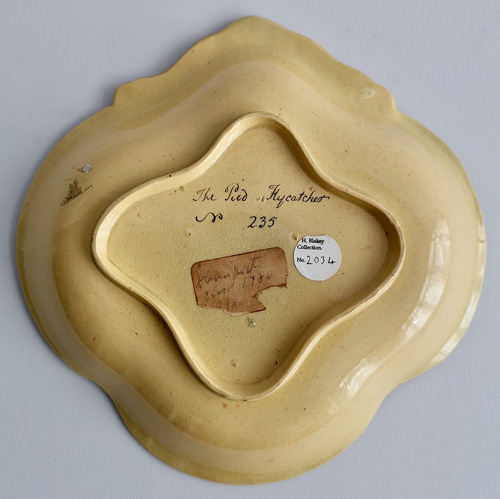
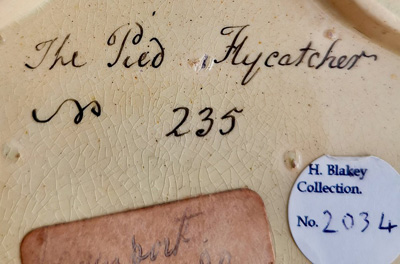
This is the first instance I have seen on Ridgway of "N" or "No" being used before the pattern number.
Photos © Willa Latham ~ Gentle Rattle of China 2020
Return to Cauldon Place patterns
Pattern 2/12
The 'Grecian' shape teapot stand. Drabware.
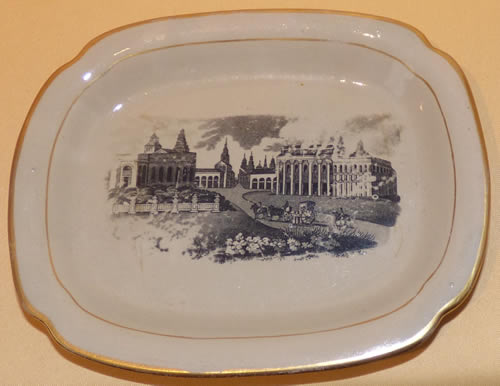
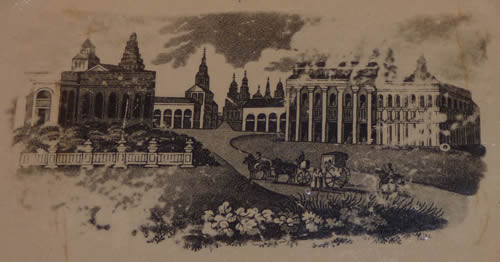
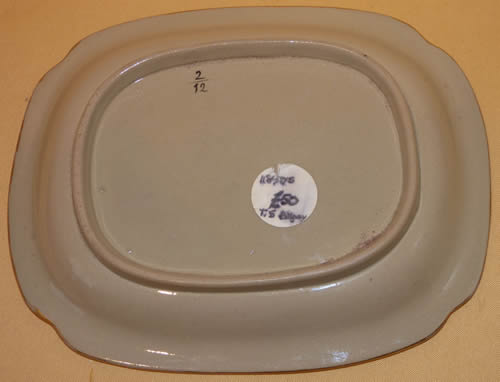
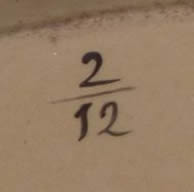
Photos © Robert Hawker 2019
Return to Cauldon Place patterns
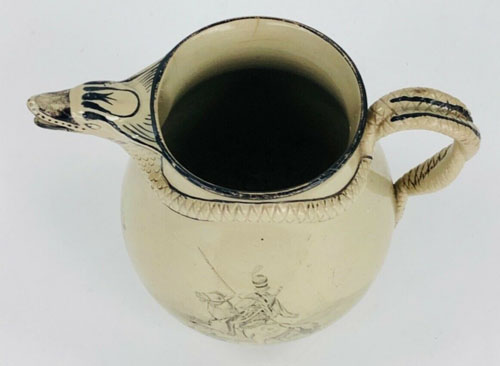
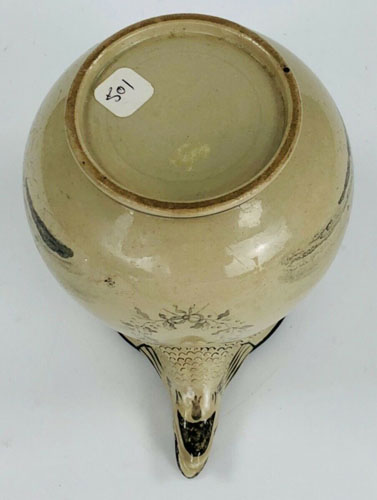
Drabware snake jugs
These jugs clearly come from the same factory as the similar sprigged bone china jugs which have been found impressed marked "Ridgway".
Drabware snake jug with gilt highlights
The jug is 120mm tall and 160mm handle to spout. Drabware.

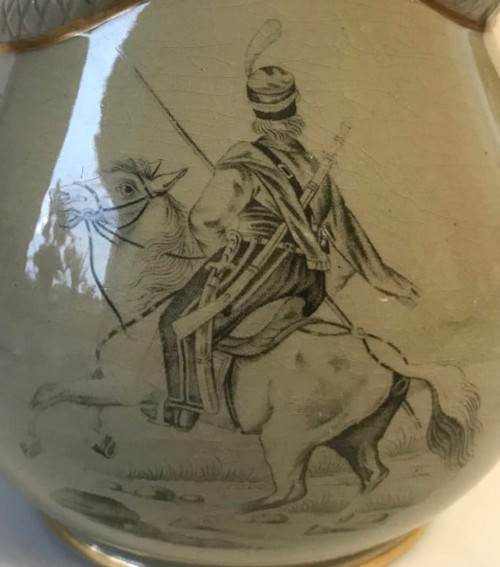
The print comes from an engraving published in London in 1813 entitlied 'A Cossack of the Oural [sic] Mountains'.


The print comes from an engraving published in London in 1813 entitlied 'A Don Cossack'.
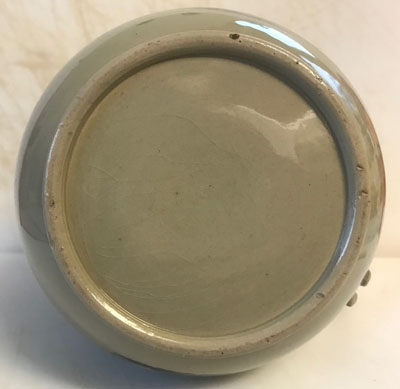
Photos © Angie Nash 2022
Return to Puzzles, Copies, Replacements page
Drabware snake jug with black highlights
A second example with black highlighting instead of gilt.
The jug is 95mm tall. Drabware.


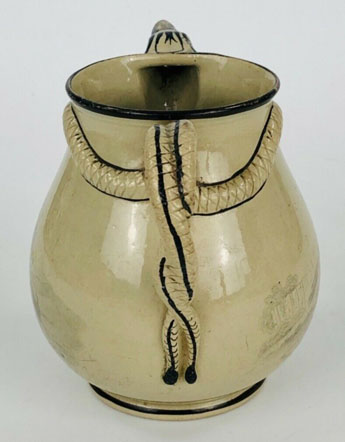
Photos © David Blakeman 2022
Return to Puzzles, Copies, Replacements page
Source prints
An engraving by Aleksandr Orlovsky published in London by Rudolph Ackermann in 1813 entitlied 'A Cossack of the Oural [sic] Mountains'.
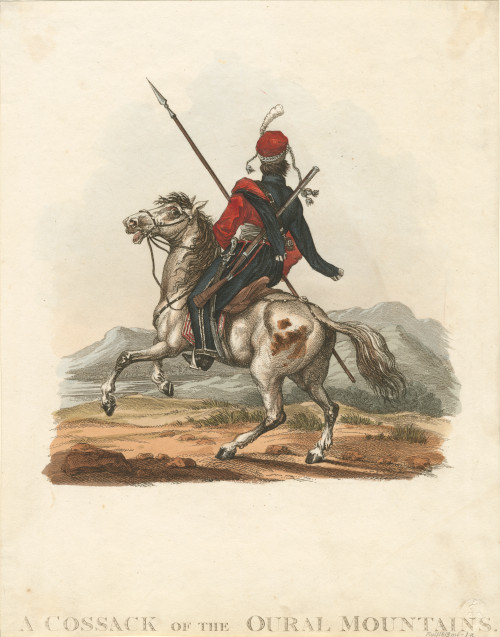
Image Brown University Library CC0
An engraving by Aleksandr Orlovsky published in London by Rudolph Ackermann in 1813 entitlied 'A Don Cossack'.
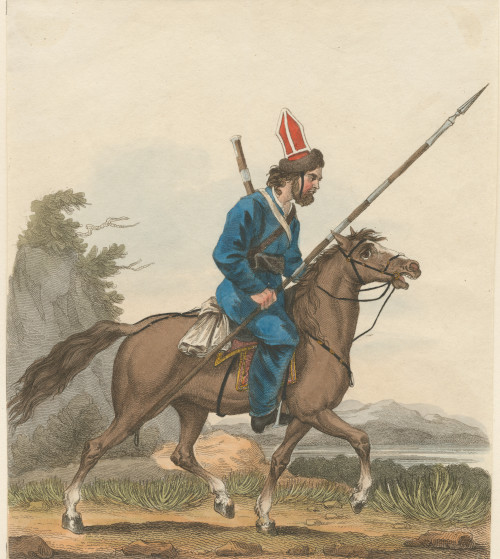
Image Brown University Library CC0
Return to Puzzles, Copies, Replacements page